I’ve been writing about travel for a while now, and I’ve seen a lot of beautiful places. But nothing—and I mean nothing—prepared me for Jiuzhaigou. I went there last fall, thinking, “Okay, it’s a national park in China, probably pretty, some lakes, some waterfalls.” I’d seen the photos online, the ones with shimmering turquoise water and snow-capped peaks. They looked almost fake, you know? Like someone had cranked up the saturation in Photoshop. So I went with low expectations, honestly. I figured it’d be nice, but not life-changing.
I was wrong. Dead wrong.
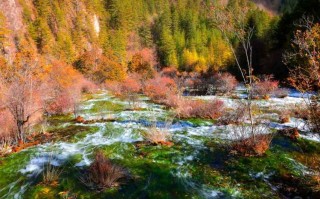
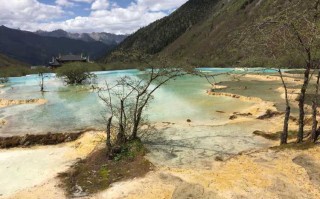
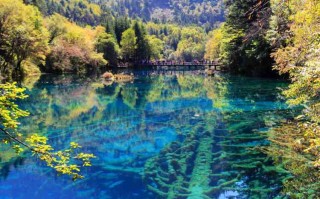
The first moment that hit me was when I got off the bus at the entrance. There was this crisp air, not cold but sharp, like a breath mint for your lungs. The leaves were starting to turn, a mix of gold and red, and the sky was that deep blue you only see in high-altitude places. I walked in, and the first lake I saw—I think it was Shuzheng Lake—stopped me in my tracks. The water was so clear, so impossibly green-blue, it looked like a giant piece of jade someone had laid down in the valley. There were fallen trees at the bottom, still intact, like ancient relics. I took out my phone, snapped a photo, and immediately felt like a fraud. The photo was pretty, sure, but it didn’t catch the way the light danced on the surface, or the quietness that felt almost sacred.
I’m not usually a soppy person. I don’t sit around writing poetry about clouds. But there’s something about Jiuzhaigou that gets under your skin. Maybe it’s the scale. The place is huge—over 600 square kilometers—but it doesn’t feel overwhelming. It feels intimate, like the mountains are keeping secrets just for you. I took the shuttle bus to the highest point, the Primeval Forest, and the air got thin. My legs were a little wobbly, but not from the altitude. It was the view. The trees were tall, like skyscrapers made of bark, and the ground was carpeted with moss and fallen needles. I stumbled on a root because I wasn’t looking down. I was looking up, trying to see where the sky ended and the forest began. A few people walked past me, chatting in Chinese, laughing. A kid was crying because he didn’t want to walk anymore. Normal stuff. But I felt like I was in a dream.
Then I went to the Five Flower Lake. You’ve probably seen a hundred photos of it—the crystal-clear water, the rainbow of colors, the submerged logs that look like underwater sculptures. And yeah, it is beautiful in photos. But the real thing? It’s different. It’s like the difference between hearing about a song and actually listening to it. The colors are more layered: turquoise, emerald, amber, deep blue, all shifting as the clouds move overhead. I sat there for about 20 minutes, just staring. A Chinese tourist next to me said, “It looks like a painting.” I nodded, but I didn’t say anything. Because a painting is static. This was alive. The water was moving, ever so slightly, carrying a few leaves along. The fish—tiny little things—were swimming around like they owned the place.
.jpg "A Journey Through Jiuzhaigou:Why My Camera Couldn’t Capture the Truth-第1张图片-九寨沟旅游网")
I’m a writer, so I’m supposed to have words for everything. But Jiuzhaigou made me speechless. Literally. I tried to write in my notebook later that night, and all I came up with was “blue, blue, more blue.” That’s not a sentence. That’s a toddler’s description. But it’s all I had.
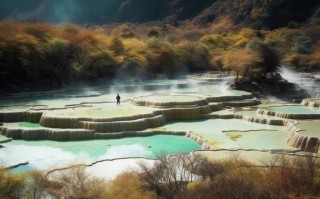
The other thing that got me was the waterfalls. Now, I’ve seen Niagara Falls—don’t get me wrong, that’s impressive. But Jiuzhaigou’s waterfalls feel different. They’re not huge and dramatic. They’re small and delicate, kind of like a love letter instead of a scream. Pearl Shoal Waterfall, for example. The water spreads out over a wide calcareous rock shelf, creating this thin, shimmering curtain of water. It’s like walking through a veil. The sound is not a roar; it’s a whisper, a constant shushing sound. I walked behind it, feeling the spray on my face, and I thought, “This is what peace sounds like.”
But here’s the thing that really struck me—Jiuzhaigou isn’t just pretty. It’s fragile. I learned that the park has been through a lot. In 2017, there was a massive earthquake, and some of the landscape changed. Parts were closed for years. I kept thinking, “This whole place could be gone tomorrow.” It’s not like a mountain in Colorado that’s been there forever. Jiuzhaigou is alive, constantly shifting, building and destroying itself. The lakes are held together by these natural limestone dams, and they can break. The waterfalls shift. The forests burn and regrow. It’s a constant cycle. And humans? We’re just tourists, shuffling along boardwalks, trying not to fall in. The park limits visitors to 40,000 a day, but still, I felt a little guilty. Like we were intruding on something private.
.jpg "A Journey Through Jiuzhaigou:Why My Camera Couldn’t Capture the Truth-第2张图片-九寨沟旅游网")
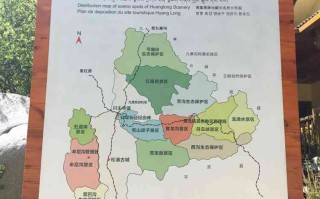
The local culture is part of it, too. Jiuzhaigou is home to Tibetan and Qiang minorities. There are little villages inside the park—Zezhawa, Shuzheng, Heye—where people still live, sort of. They’ve opened shops and restaurants, selling yak meat skewers and handmade jewelry. I bought a bracelet from an old Tibetan lady, her face all wrinkled from the sun. She smiled at me with missing teeth. I didn’t understand what she said, but I smiled back. It felt real, that interaction. Not staged. Though, I know some tourists complain it’s too commercial. Maybe it is. But you know what? We’re the ones buying the stuff.
I spent two full days in Jiuzhaigou. By the end of it, my feet were killing me—I’d walked like 20 kilometers each day. My phone died. My camera battery was empty. But I didn’t care. That night, I sat on the balcony of my little hotel room, looking at the stars. The sky was so clear, so thick with stars, it looked like someone had poured milk across it. I tried to pick out constellations, but I couldn’t remember any. I just lay there, letting the cold air bite my cheeks.
Thinking back now, months later, I still get this weird feeling in my chest when I remember Jiuzhaigou. It’s not about the photos or the posts or the likes. It’s about that moment when you’re standing next to a lake that’s bluer than any blue you’ve ever seen, and you realize that some things aren’t meant to be captured. They’re meant to be lived. And if you ever go there, don’t worry about getting the perfect shot. Just stand there. Breathe. Let the place do its thing. Trust me, you won’t forget it.
.jpg "A Journey Through Jiuzhaigou:Why My Camera Couldn’t Capture the Truth-第3张图片-九寨沟旅游网")
So yeah, if you’re into travel and you’re looking for a spot that’ll actually mess with your sense of what’s real, go to Jiuzhaigou. Just don’t expect your camera to do it justice. It won’t. And maybe that’s the whole point.
标签: 九寨沟旅游的观后感英文
【备注】:如需即时、准确或者更多相关信息,请联系客服。