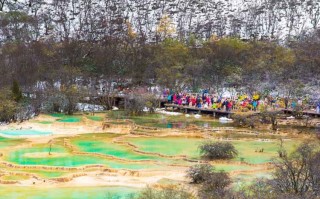
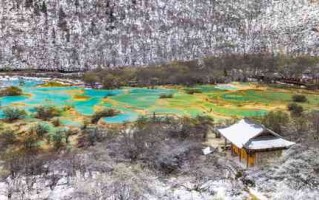
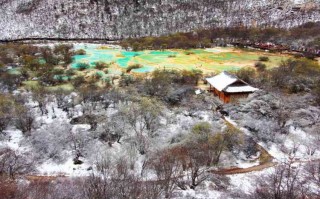
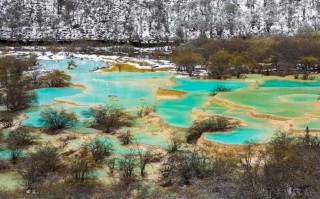
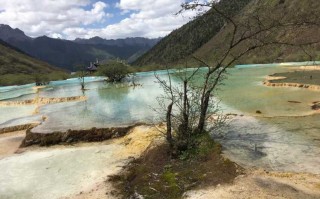
I’ve been to Jiuzhaigou four times over the past nine years. The first time, back in 2015, I was just another tourist with a selfie stick and a checklist. The most recent trip was last October, when I finally managed to drag my lazy bones out of bed at 5:40 a.m. to catch the first shuttle bus into the valley. So yeah, you could say I’ve learned a thing or two the hard way.
Let me start with the thing nobody tells you about Jiuzhaigou: the altitude will mess with you in weird ways. Not in a dramatic “I need an oxygen tank” kind of way (unless you have underlying conditions, in which case ignore everything I say and talk to your doctor). But your body definitely feels it. I remember my second trip, I bent down to tie my shoelace at the Long Lake overlook and stood up so fast I saw stars. Just stars, like someone threw glitter in my face. A local Tibetan woman selling yak yogurt nearby laughed at me — not in a mean way, more like “yep, happens to everyone” — and handed me a cup of hot butter tea for five yuan. Best five yuan I ever spent. My advice: drink more water than you think you need, and don’t sprint up stairs like you’re training for the Olympics. Take it slow. The lakes aren’t going anywhere.
When to go is the second most common question I get. And honestly? It depends on what kind of masochist you are. Summer (July–August) is packed with tour groups, the weather is unpredictable, and the waterfalls are roaring at full force — which sounds great until you realize you’re sharing the boardwalk with about 40,000 other people all trying to take the same photo of Nuorilang Falls. But the water volume is genuinely impressive, and the greenery is lush. Autumn (mid-October to early November) is the postcard season. The red and gold leaves against turquoise lakes look almost fake, like someone cranked up the saturation on reality. It’s also the most expensive and crowded time, with hotel prices doubling and lines for the shuttle buses that feel endless. Winter (December to February) is my personal favorite, and I know I’m in the minority here. The park gets quiet. Some of the upper trails close due to ice. But the snow on the pine trees, the frozen edges of the lakes, the steam rising off the water in the early morning — it’s like walking through a Chinese ink painting. Plus, you can actually hear yourself think. Spring (March to May) is a gamble. Sometimes the snowmelt makes the water murky, sometimes it’s crystal clear. I’ve had both experiences within the same month.
Now, the shuttle bus system. Here’s where I see most first-time visitors make mistakes. The park buses run on a loop, and you can get on and off at designated stops. Simple, right? Except when everyone and their mother decides to get off at the same stop at the same time, and suddenly you’re shuffled like cattle into a viewing platform that’s more elbow than elbow room. My trick: go against the flow. When the buses drop everyone at the top (Primeval Forest or Long Lake, depending on which valley you enter), most people start walking downward along the main boardwalk. Instead, I like to take a side trail, or walk further up than the crowds, or simply sit on a bench for ten minutes and let the wave pass. The difference is night and day. I’ve had Five Flower Lake nearly to myself at 11 a.m. on a “crowded” day, just because I waited for a big tour group to move on. Patience is a superpower in Jiuzhaigou.
Food inside the park is a sore subject. The only real restaurant is at Nuorilang, and it’s… fine. Buffet style, overpriced, and packed at lunchtime. I’ve done it once and never again. Now I always pack my own lunch: some flatbread, a couple of hard-boiled eggs, an apple, and a thermos of tea. There’s something deeply satisfying about eating a simple meal while sitting on a boardwalk bench, staring at Panda Lake, with no one else around except the occasional bird. If you must buy snacks, there are small stands selling instant noodles and sausages near some of the larger stops, but they jack up the prices. Bring your own stash.
.jpg "Nine Years,Four Visits to Jiuzhaigou:The Things Guidebooks Don’t Tell You-第1张图片-九寨沟旅游网")
The toilets. Let’s talk about the toilets, because nobody warns you. The ones at the park entrance and Nuorilang are clean, modern, and have toilet paper. The ones at the smaller scenic stops? Well, let’s just say I once walked into one near Arrow Bamboo Lake, took one look, and decided I could hold it for another two hours. Bring your own tissue, hand sanitizer, and a strong sense of determination. And maybe don’t drink a full bottle of water right before getting on the shuttle bus, because those winding mountain roads will test your bladder in ways you never imagined.
For accommodation, I’ve stayed everywhere from a 30-yuan hostel bed in Zhangzha Town to a fancy resort with heated floors and a bathtub overlooking a stream. The sweet spot, in my opinion, is a mid-range guesthouse run by local Tibetan families. They’ll often pick you up from the airport or bus station, cook you a home-cooked meal for a small fee, and tell you stories about the valley that you won’t find in any guidebook. One elderly woman, who ran a small inn near the park entrance, taught me how to say “thank you” in Tibetan (it’s “thuk je che”, by the way, though my pronunciation definitely made her grandchildren giggle). Those moments are the ones I remember long after the photos fade.
.jpg "Nine Years,Four Visits to Jiuzhaigou:The Things Guidebooks Don’t Tell You-第2张图片-九寨沟旅游网")
The elephant in the room: the 2017 earthquake. Jiuzhaigou was hit hard, and parts of the park were closed for years. Even now, some areas remain off-limits, and the landscape has changed in subtle ways. The water is still absurdly blue, the forests are still dense and ancient, but there’s a rawness to some of the scenery that wasn’t there before — exposed rock, new waterfalls, a lake that shifted color slightly. I’m not going to romanticize a natural disaster, but there is something quietly powerful about seeing a place rebuild itself. It’s a reminder that Jiuzhaigou isn’t a museum piece; it’s a living landscape.
One more thing: don’t rush. I know, I know. You paid for the ticket, you want to see everything, the park is huge, and the shuttle buses make it feel like a race. But trust me, Jiuzhaigou rewards the slow traveler. The best moments I’ve had there weren’t at the famous viewpoints with their polished signage and selfie-platform crowds. They were on the quiet stretches of boardwalk between stops, the places where the path dips under a canopy of pines and you can hear the water gurgling beneath the wooden planks. They were in the fifteen minutes I sat at the edge of Shuzheng Lakes, watching a pair of ducks paddle in lazy circles, their ripples spreading out like little earthquakes. They were in the early morning mist rising off the water, before the first shuttle bus arrived, before the day officially began.
.jpg "Nine Years,Four Visits to Jiuzhaigou:The Things Guidebooks Don’t Tell You-第3张图片-九寨沟旅游网")
So go. Go with an open mind and a full water bottle and a packet of tissues in your backpack. Go without trying to capture every single moment on your phone. Some of Jiuzhaigou belongs in pixels, sure. But most of it belongs in your chest, in the quiet spaces between your ribs, where the blue of the lakes seeps in and never quite leaves.
标签: 去九寨沟旅行攻略英文
【备注】:如需即时、准确或者更多相关信息,请联系客服。